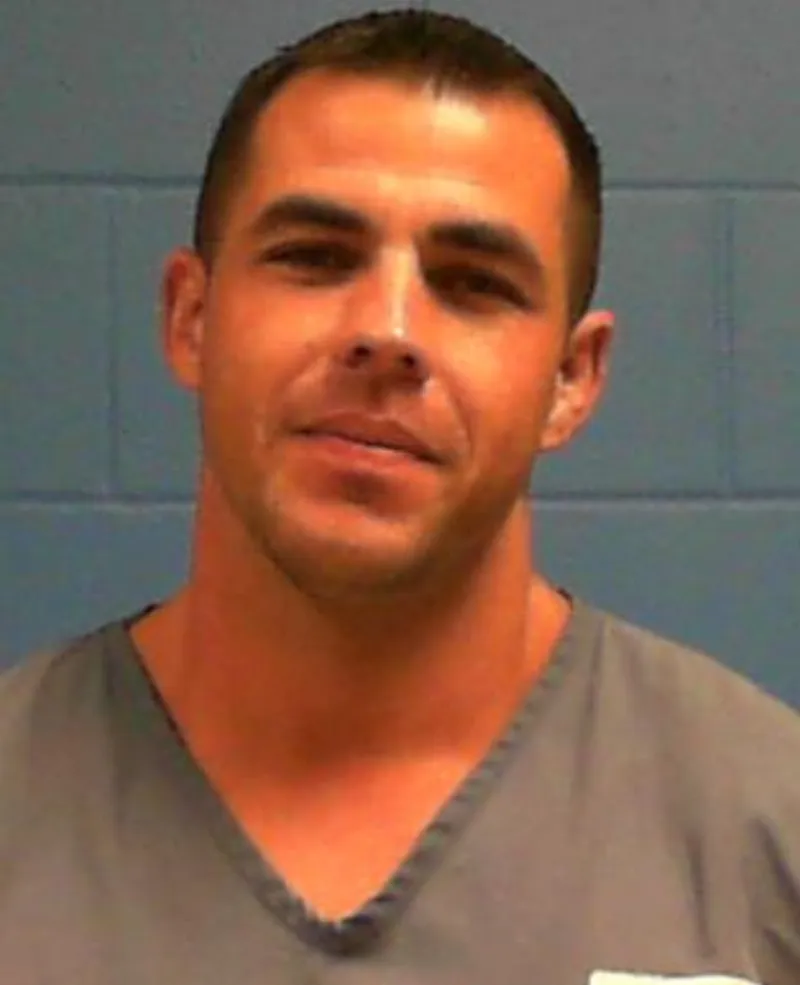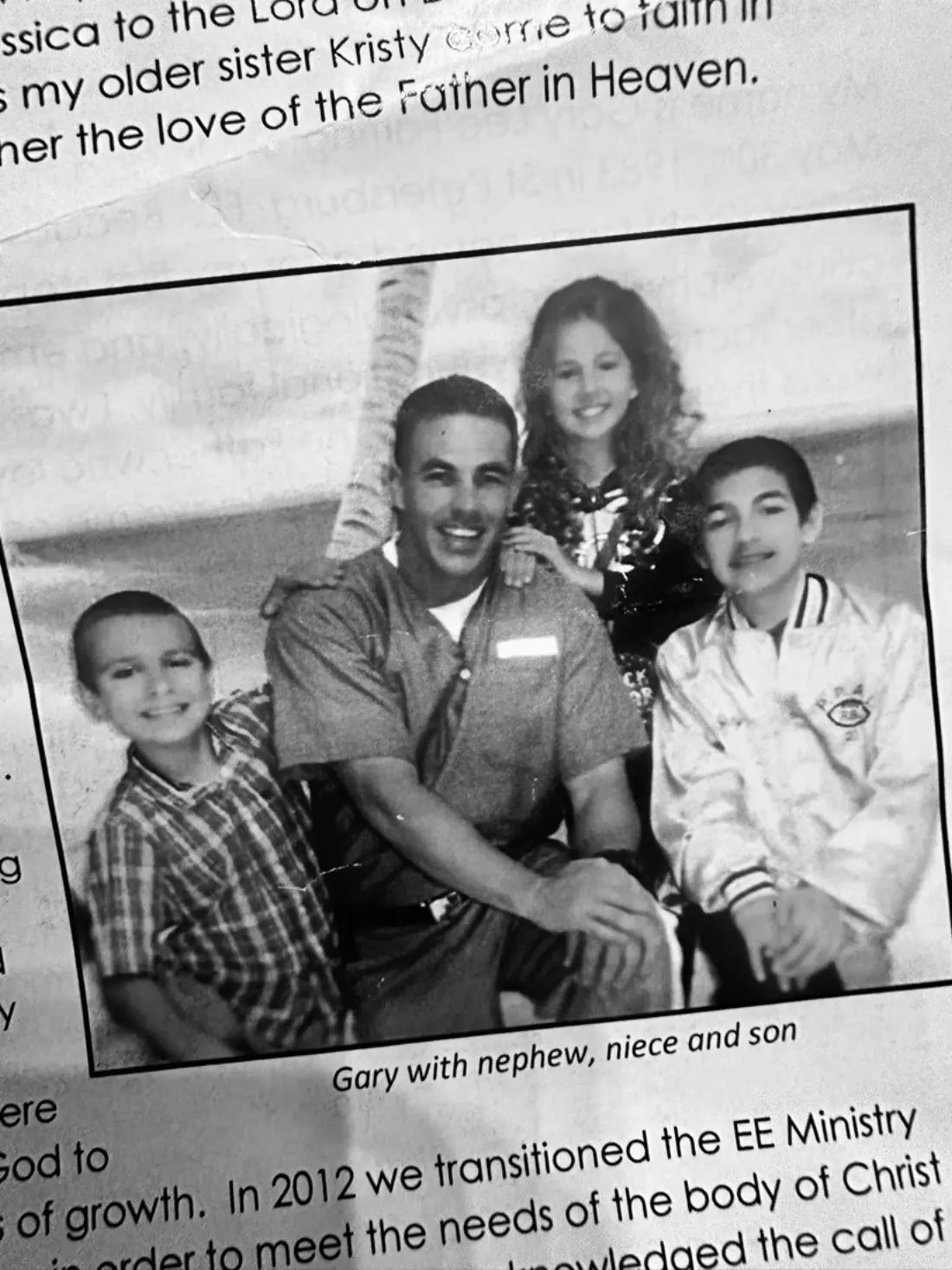
Gary has never denied his crime. He has never minimized it. He has spent more than two decades using his own failures as the teaching text for men preparing to leave prison. What follows is the record, in order, from before the crime through the twenty-three years since.
Gary Lee Farrington Jr. was raised in violence he did not choose. His father was incarcerated; his mother was repeatedly abused by his father and stepfather in front of him for years. Research says a child with an incarcerated father is about six times more likely to go to prison. The odds were against him before he could read.
None of that excuses what came later. Gary says it plainly:
That may explain my violent behaviors, but it does not excuse them. — Gary Lee Farrington Jr.
By fifteen, Gary's first act of violence was against his own mother, a fact he has never hidden:
If my own loving mother was not safe from my violent behaviors, then nobody in society ever had a chance. — Gary Lee Farrington Jr.
Before the crime, Gary had a son, Mitchell. By May 2003, Gary had lost his job, been evicted by his mother, spent his last paycheck on drugs, and abandoned Mitchell and his mother for addiction and crime on the streets.
On May 19, 2003, nineteen-year-old Gary Farrington took part in a home invasion and robbery that ended in the death of Josephine Jean Nuvolone. One of three convicted suspects, Gary was sentenced to life in prison without parole.
He was nearly the age of the boys he now teaches.
The devastating reality is that your precious mother is dead as a direct result of my criminal acts, premeditated or not. Every day since that horrifying tragedy not a moment passes by that I do not personally feel an unfathomable sorrow and regret for my depraved choices that caused your mother's death. — Gary Lee Farrington Jr., Letter of Remorse to the Nuvolone family
Transformation was not immediate. Early in prison, Gary wrestled with anger and bitterness, blaming his environment and telling himself it was not murder because it was not premeditated. The truth kept convicting him.
For four years, he resisted it.
On November 30, 2007, four years into his life sentence, Gary encountered God in a six-by-nine solitary cell. This did not result in a surface-level religious change, but a long-term restructuring of identity, memory, and responsibility.
One early fruit was forgiving his father, which Gary says unlocked his own accountability: he could not hold his father accountable for cycles of violence while excusing himself from his own.
Everything in Gary's transformation traces back to that encounter with God in solitary confinement.
The first person Gary had to face was his mother, his first victim at fifteen. During a Mother's Day prison visit, he asked her forgiveness. She began her own faith journey that day, and later died peacefully, knowing her son's life had found meaning and redemption.
Then Gary faced his son. Mitchell, born and abandoned before Gary's incarceration. Through the Malachi Dads program — a prison reentry ministry for incarcerated fathers — Gary reconnected with him. Mitchell forgave him and has remained free of the justice system, breaking a three-generation cycle of incarceration.
The boy who was statistically six times more likely to be in prison, because his father was, is not.
Gary plants a fully functional Inmate Resident Pastored Church. First of two churches inside the Florida prison system.
Gary's first post-secondary degree, earned entirely while incarcerated.
Earned through Leavell College, New Orleans Baptist Theological Seminary's extension for incarcerated students. The men who recommended him for ordination had to vouch for his transformation in writing.
Transferred to Hamilton CI as a Florida Department of Corrections Field Minister, Gary founds a second church which regularly draws up to a quarter of the institution's population.
A single documented event within the body of work — hundreds of men baptized across two decades of ministry.
That church is not Gary's. It is pastored by one of the many men Gary has mentored. Downstream evidence of what one transformed life can accomplish.
Three short clips from inside Hamilton CI. Click any one to play.
Gary is housed at Hamilton CI's Short-Sentence wing, a Level 3 reentry facility for men three to five years from release. The Florida Department of Corrections (FDOC) sends short-sentenced men there for structure and serious ministry — because of men like Gary. He is the compound's only man serving Life Without Parole.
Gary serves as an FDOC-certified Field Minister and head mentor of the Second Chance Faith and Character Academy in F1 dorm, where ninety to one hundred men live under his direct mentorship.
| Monday | 4:00 – 5:00 PM | DIRECT — 65 criminal thinking patterns, 41 correctives. 35–40 men per session. |
| Tuesday | 4:00 PM | G.R.I.D. — Getting Real In Discipleship. |
| Wednesday | 4:00 PM | Kings Highway Church service. Up to a quarter of the unit's population at peak. |
| Friday | 4:00 – 5:00 PM | DIRECT (second weekly session). |
| Daily | 5:00 AM | Personal Bible study and class preparation. "No matter if it is a weekend or holiday, rain or sunshine." |
In DIRECT, he uses his own crime as the teaching case study. Every session. He does not ask the men to confess anything he himself has not already named in front of them. A fellow participant wrote that Gary is "forced to relive his crime every time he teaches this class."
Since November 30, 2007. One of the longest clean records of any life-sentenced inmate currently held in the Florida system. Every other item below orbits this one.
Total time served as of April 2026.
Associate of Theology (Logos, 2016). B.A. Christian Ministry (NOBTS, 2018).
Hardee CI (2012). Kings Highway at Hamilton CI (2023). Third at Suwannee CI in progress.
Criminologists call the study of how people leave criminal behavior behind desistance. Decades of research converge on a small set of factors that predict whether a formerly incarcerated person will return to crime. Gary meets every one of them: